Origins, Meaning, and the Coast Salish Story
The Cowichan sweater is not just a cold‑weather staple; it is a living expression of Coast Salish artistry, place, and identity. Rooted with the Quw’utsun’ (Cowichan) people on Vancouver Island in British Columbia, its story reaches back to pre‑contact weaving traditions made with mountain goat wool and the now‑extinct Coast Salish wool dog. In the 19th century, Salish women encountered European knitting tools and techniques and, with remarkable creativity, transformed them—melding ancestral wool knowledge with new methods to produce an enduring garment built for the Pacific Northwest’s wet coastal climate.
What emerged was a heavyweight, weather‑resistant cardigan knit by hand from locally spun, minimally processed sheep’s wool. Rich in natural lanolin, the wool repels moisture and holds heat, a practical answer to life and work along the Salish Sea. Over time, knitters developed distinctive motifs—salmon, eagle, whale, and thunderbird, among others—rendered in a palette of undyed cream, grey, brown, and black. These designs are not simply decorative. They carry stories of land, water, and kinship. Many patterns have family connections and regional lineages, shaped by generational skill and the maker’s eye.
By the mid‑20th century, the authentic Cowichan cardigan had become iconic—worn by loggers, fishers, travelers, musicians, and collectors. Yet popularity brought challenges. Mass‑produced imitations and “inspired” designs appeared, often without credit or benefit to Indigenous makers. Public controversies—such as those surrounding look‑alike Olympic garments—drew attention to the importance of cultural recognition and fair compensation. To help buyers distinguish the real thing, Cowichan knitters and community organizations have used identifiers such as “Genuine Cowichan” labels and emphasized purchase from Indigenous makers or reputable Native‑owned sellers.
Today, the Cowichan sweater continues to embody resilience and continuity. It is a vital source of livelihood and cultural pride for Coast Salish families, a tangible way to support community economies, and an heirloom that carries forward the interwoven values of respect, reciprocity, and relationship to land. Choosing an authentic piece—knowing who made it, where, and how—honors the people who sustain this tradition and ensures the legacy remains rooted in the communities that created it.
How to Recognize an Authentic Cowichan Sweater (and Care for It)
Recognizing an authentic piece starts with the wool. Traditional Cowichan garments use hand‑spun or locally prepared, minimally processed sheep’s wool that retains some lanolin. When you touch it, the yarn should feel substantial—dense yet pliable—with a natural “tooth” and a faint, clean wool scent. The color palette typically relies on undyed shades: cream, heathered grey, warm brown, and near‑black. While occasional dyed accents appear, pieces leaning heavily on bright synthetic colors are likely not authentic. Look closely at the yarn itself; a single‑ply, sturdy strand with minor thickness variations is common, reflecting the hand prep and spin.
Construction provides more clues. Traditional sweaters are hand‑knit in the round for durability and to minimize seams, with a thick gauge that produces a wind‑resistant fabric. Many feature a shawl collar and a strong metal zipper or sturdy buttons. Pattern placement is thoughtful: motifs line up across the zipper, wrap smoothly around the body, and sit balanced at the chest or yoke. Inside, you may see “floats” from stranding colorwork—evidence of hand tensioning rather than machine regularity. Subtle irregularities in stitch size, tension, or motif edges are a positive sign of a human hand, not a factory.
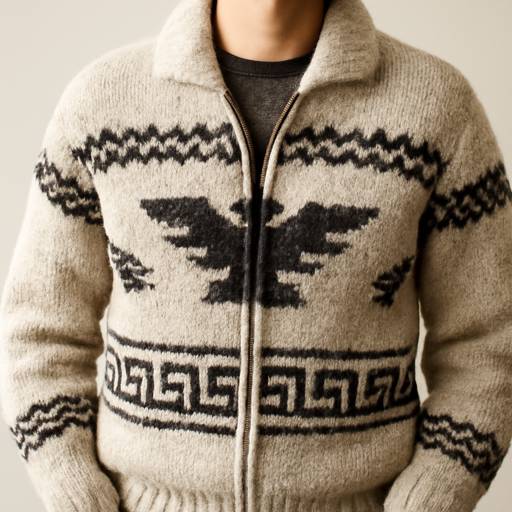
Labels and provenance matter. Authentic garments often identify the community or maker and may bear Cowichan community markings. Reputable sellers can share who knit the sweater and where the wool originated. Red flags include acrylic blends, feather‑light fabric, perfectly uniform machine stitches, and vague or missing information about the maker. If a shop cannot speak to origin, it is likely a mass‑market copy.
Caring for your garment preserves both warmth and structure. Avoid machine washing, agitation, and high heat. Instead, soak gently in cool to lukewarm water with a small amount of wool wash, keeping handling minimal. Rinse carefully, press out water using towels (never wring), then lay flat to dry on a rack, shaping to measurements. Do not hang, as the weight can stretch the shoulders. Store folded, ideally with cedar to deter moths. Spot clean as needed and avoid harsh dry‑cleaning solvents that strip lanolin. With proper care—and occasional expert mending—your authentic sweater can last for decades and gather a patina of use that speaks to the life you live in it.
Styling, Sizing, and Responsible Buying in British Columbia and Beyond
The Cowichan sweater is remarkably versatile, bridging practical outerwear and meaningful art. In the Pacific Northwest, it functions as a jacket during shoulder seasons and a mid‑layer in deep winter. Style it with denim, work pants, or wool trousers; pair with leather boots or rubber boots on wet days; and let its natural palette anchor an outfit of textured layers—flannel, twill, or canvas. The shawl‑collar zip cardigan is classic, but pullovers and buttoned styles exist as well. Because each is hand‑made, the silhouette can range from boxy heritage fits to more contemporary cuts, offering options for daily wear or special occasions.
Getting the right size means thinking about both measurements and drape. Start with your actual chest measurement and consider intended ease—2 to 4 inches of room is common for layering without bulk. Check back length (to the hip is standard) and sleeve length from underarm to cuff. Keep in mind that dense wool relaxes slightly with wear, especially at shoulders and elbows, so a just‑right fit at first try is ideal. Makers often accommodate custom sizing; a conversation about your build, layering habits, and climate can result in the perfect proportions. If you’re between sizes, prioritize shoulder fit and overall length, as cuffs and hems are more easily adjusted by an experienced knitter.
Responsible buying centers Indigenous authorship and fair value. Ask who made the sweater, what community they’re from, and how they’re compensated. Look for Native‑owned galleries and sellers rooted in the Northwest Coast art community, whether you’re shopping on Vancouver Island, in Greater Vancouver, or visiting markets and cultural events across British Columbia. In places like Victoria, Nanaimo, Vancouver, South Surrey, and White Rock, seasonal art shows and Indigenous cultural gatherings often feature knitters or trusted vendors who can speak directly to provenance. Online, choose sellers who foreground authenticity, share artist information, and stand behind quality.
Thoughtful care for culture mirrors the care you give the garment itself. Avoid commodified “look‑alikes” and mislabeled imports; they tend to undercut Coast Salish artists and dilute the meaning of the work. When you invest in a genuine piece—or commission a custom one—you support families who carry forward knowledge honed over generations. For a trusted place to learn more and find an ethically sourced Cowichan sweater, seek out Native‑owned businesses that have longstanding relationships with makers and a clear commitment to authenticity and quality. In doing so, you become part of the sweater’s story—one of warmth, respect, and enduring connection to land and community.

Thessaloniki neuroscientist now coding VR curricula in Vancouver. Eleni blogs on synaptic plasticity, Canadian mountain etiquette, and productivity with Greek stoic philosophy. She grows hydroponic olives under LED grow lights.