
The Architecture of a Post‑Quantum Secure, Privacy‑Preserving Invest Network
A modern invest network brings together cryptographic resilience, decentralized coordination, and high‑availability operations to deliver a trustworthy base layer for digital value. At its core, this kind of Web3 infrastructure orchestrates an interoperable fabric of validator nodes, data availability layers, key management services, and compliance tooling—each designed to safeguard assets and data under both classical and next‑generation threats. The term “post‑quantum secure” signals a strategic pivot: networks that integrate quantum‑resistant primitives today will be markedly better prepared for tomorrow’s adversaries. While traditional elliptic‑curve signatures remain prevalent, forward‑looking architectures add support for lattice‑based schemes and hybrid modes that combine classical and post‑quantum cryptography to protect identities, messages, and transaction finality.
Beyond cryptography, a robust Web3 infrastructure emphasizes privacy without sacrificing verification. Secure enclaves and threshold signing reduce single points of failure, while multi‑party computation and role‑based access keep operational keys auditable yet confidential. Zero‑trust networking, encrypted peer discovery, and policy‑driven orchestration provide defense‑in‑depth—crucial when nodes run across heterogeneous clouds, sovereign data centers, and edge environments. On the data layer, content addressing, tamper‑evident logs, and immutable state proofs corroborate integrity, allowing participants to validate outcomes independently.
Resilience and uptime are equally non‑negotiable. Institution‑grade deployments typically adopt multi‑region clusters, automated failover, and policy‑as‑code to enforce security baselines across diverse jurisdictions. Observability pipelines stream cryptographic health metrics, consensus participation stats, and latency telemetry into SIEMs and compliance dashboards. Together, these features transform a blockchain backbone into a dependable platform for mission‑critical use cases—from regulated finance to critical infrastructure. In practice, organizations seek providers who can consolidate these capabilities into a single, coherent stack. For a deeper look at how this ethos translates to production, the invest network illustrates how post‑quantum, privacy‑preserving design choices can be delivered as an institution‑ready service.
Crucially, a well‑designed network is not monolithic. Modular execution environments, pluggable consensus, and cross‑chain messaging allow teams to choose the best primitives for a given job. This modularity shortens time‑to‑market and reduces vendor lock‑in—key advantages for enterprises that must adapt quickly to new regulatory guidance, user demand, and technological shifts. The result is a flexible, future‑proof foundation that aligns with stringent security mandates while preserving the benefits of decentralization.
Privacy Without Friction: Zero‑Knowledge Proofs, Compliance, and Performance
Privacy in Web3 cannot be an afterthought. It must be native, verifiable, and performant. Zero‑knowledge (ZK) proof systems—such as zk‑SNARKs and zk‑STARKs—enable participants to prove statements about data without revealing the data itself. In an invest network optimized for ZK, this means users can demonstrate account solvency, eligibility, or policy conformity without exposing sensitive balances or personal identifiers. Banks can validate capital adequacy on‑chain, marketplaces can enforce KYC/AML constraints, and supply chains can attest to provenance with selective disclosure. The operative principle is “privacy by default, transparency by design,” where confidential state remains shielded but regulators and counterparties receive verifiable, narrow proofs created for specific oversight responsibilities.
Turning cryptographic theory into production‑grade systems demands specialized engineering. Prover performance is boosted with GPU/FPGA acceleration and distributed proving services, while on‑chain verification costs are contained via succinct circuits and batching strategies. Circuit libraries are versioned and audited; deterministic builds and reproducible setups help maintain chain‑of‑custody for critical proofs. Secure parameter ceremonies, if required, are documented with cryptographic attestations to maintain trust. When combined with policy‑aware smart contracts, organizations can embed compliance automation into transaction flows: if a proof of rule‑adherence is missing or malformed, the transaction fails by default.
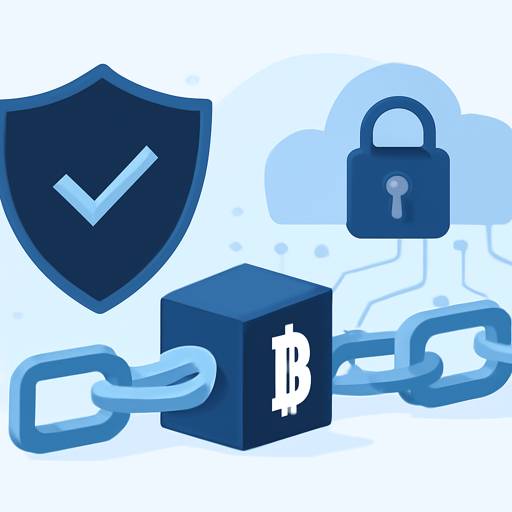
Privacy also intersects with data residency and global regulation. Institution‑ready platforms expose tools for segregating data flows, pinning resources to approved geographies, and generating audit‑friendly traces without leaking business secrets. Integrations with enterprise identity systems enable confidential credential issuance and revocation. Secure logging—hashed, time‑stamped, and anchored to immutable ledgers—lets internal and external auditors verify controls non‑invasively. With these capabilities, privacy transforms from a perceived blocker into a competitive advantage: customers gain confidence, compliance costs decrease through automation, and partners transact with lower counterparty risk.
Importantly, privacy cannot compromise liveness. A high‑assurance network pairs ZK‑first design with predictable throughput, smart fee markets, and QoS prioritization for enterprise transactions. This balance—confidentiality with speed—allows asset tokenization, cross‑border payments, and institutional DeFi to scale without exposing critical data. It is this union of privacy‑preserving mechanisms and production performance that distinguishes modern infrastructure from experimental testbeds.
Institution‑Ready Connectivity and Real‑World Use Cases
Enterprises and institutions adopt decentralized technology when it demonstrably reduces risk, expands market access, and integrates with existing systems. A production‑grade invest network delivers on these requirements through decentralized connectivity and rigorous operational standards. Interoperability layers connect public chains, private ledgers, and off‑chain services, enabling atomic swaps, cross‑chain settlement, and verifiable data exchange. Gateways and oracles are designed for integrity: they employ attested runtimes, slashing conditions, and multi‑source reconciliation to curb manipulation. With post‑quantum key paths and hardware‑backed custody flows, custodians and asset managers can secure multi‑billion‑dollar portfolios while maintaining regulatory alignment.
Consider tokenized real‑world assets. A bank can mint digitized debt instruments where investor eligibility is enforced via ZK credentials; coupon distributions execute automatically, while settlement proofs anchor compliance reports. Supply chains gain notarized provenance with confidential bill‑of‑materials; verifiers check authenticity without exposing manufacturing IP. Energy markets can tokenize green certificates and meter data; zero‑knowledge attestations prevent data leakage yet prove emissions reductions for ESG audits. In each scenario, decentralized connectivity reduces reconciliation overhead and minimizes time‑to‑finality, while cryptographic assurances raise trust among counterparties who previously relied on bilateral contracts and manual checks.
Institution readiness is more than cryptography; it is an operational commitment. Enterprises expect 24/7 SLAs, disaster recovery across regions, and documented controls aligned to frameworks like SOC 2 and ISO 27001. They need granular role separation, just‑in‑time access, and automated policy enforcement to reduce insider risk. Treasury desks require deterministic fee modeling and reporting hooks for financial controls. Risk teams need real‑time metrics on consensus participation, validator health, and transaction anomalies. A capable platform surfaces these signals through standardized APIs and dashboards, integrating with existing ITSM, GRC, and SIEM tools to streamline audits and incident response.
Connectivity also extends to edge and IoT environments. Smart infrastructure—cities, grids, mobility—benefits from verifiable device identity, secure firmware provenance, and privacy‑preserving telemetry. With post‑quantum‑aware identity and encrypted peer‑to‑peer channels, devices can authenticate and transact micro‑payments or data proofs without central chokepoints. Telecoms and industrials gain a cryptographically verified control plane that scales across geographies and vendors, minimizing vendor lock‑in and boosting resilience. As organizations plan multi‑year roadmaps, a post‑quantum migration path, hybrid cryptography, and modular rollup strategies provide future compatibility without halting current operations. The outcome is a durable, adaptable foundation where decentralized connectivity, strong privacy, and compliance converge to power high‑value, real‑world applications.

Thessaloniki neuroscientist now coding VR curricula in Vancouver. Eleni blogs on synaptic plasticity, Canadian mountain etiquette, and productivity with Greek stoic philosophy. She grows hydroponic olives under LED grow lights.
