What Is Landscape AI and Why It’s Changing Outdoor Design
Landscape AI blends computer vision, generative models, and design intelligence to help people envision outdoor transformations before a single plant is purchased or a paver is set. Instead of relying solely on sketches, mood boards, or generic templates, homeowners and professionals can start with a photo of an existing yard and generate photorealistic previews that reflect scale, lighting, textures, and real-world constraints. The result is a faster, clearer path from idea to plan—especially for users who don’t have advanced design training but still want inspired, practical solutions.
At its core, AI landscaping excels at rapid iteration. It can experiment with front yard curb appeal, backyard entertainment zones, or low-maintenance gardens—swapping out plant palettes, patio shapes, and materials in seconds. This ability to A/B test outdoor concepts empowers more confident decisions. Want to compare a modern xeriscape to a cottage garden? A winding gravel path versus geometric pavers? With landscape ai, those scenarios become side-by-side visuals instead of guesswork. That means fewer costly changes during installation and a higher chance the finished space matches the vision in your mind.
The technology is also context-aware. It can preserve existing features—mature trees, fences, slopes, and architectural lines—so designs feel integrated rather than pasted on top. It’s particularly useful for balancing aesthetic goals with practical realities: sun exposure, privacy needs, small setbacks, HOA constraints, or tricky transitions from deck to lawn. For real estate agents, AI-powered renderings unlock potential by showing buyers what a neglected yard could become. For designers and contractors, visual concepts streamline client communication, reduce back-and-forth, and set clearer expectations.
Importantly, landscape design AI does not replace professional expertise; it elevates it. Think of it as a powerful visualization and planning partner. It can spark ideas for outdoor kitchens, fire features, pergolas, rain gardens, and native plant beds—then help refine the plan for maintenance, budget, and buildability. From small city terraces to sprawling suburban backyards, the promise is the same: less uncertainty, more creativity, and a smooth transition from blueprint to backyard.
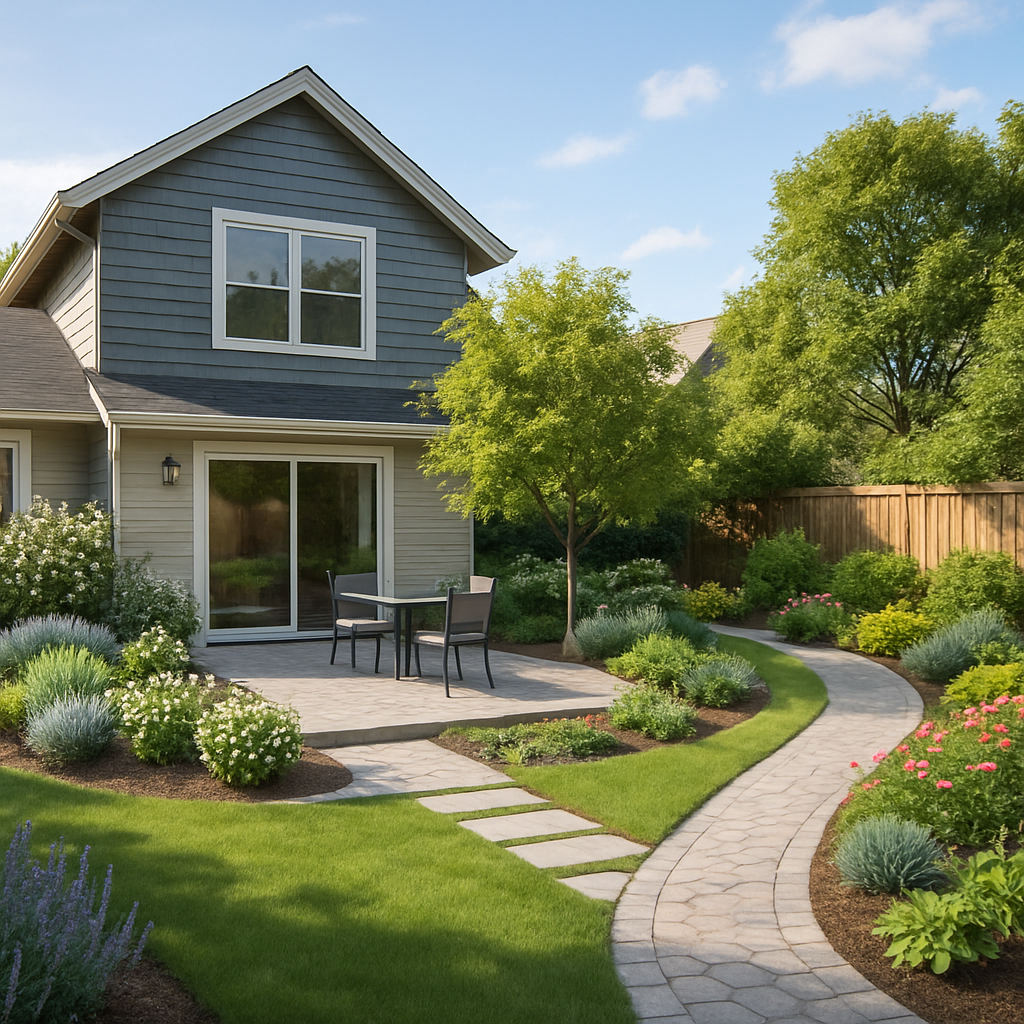
How to Use Landscape AI for Smarter Planning: A Step-by-Step Playbook
Start with a clear, well-lit photo of the current space. Take multiple angles if possible—front approach, side views, and a wide shot that includes house elevations or fences for scale. Next, define priorities in plain language: “We want privacy near the patio,” “A place to grill and dine,” “Low-water front yard with native color,” or “Play area separate from the dog run.” The best landscape ai platforms translate these goals into stylistic choices and space planning elements such as pathways, planting bands, seating nooks, and lighting accents.
Prompts work best when they balance design style and functionality. Rather than only saying “modern,” add guiding details: “modern, warm wood tones, permeable pavers, native grasses, low-voltage lighting, drought-tolerant perennials.” If you’re in a hot, arid climate, emphasize xeriscape principles and shade strategies. In coastal settings, call out wind-tolerant plants and corrosion-resistant materials. In colder zones, specify snow storage areas and durable edging. This climate-forward approach helps AI propose realistic plant selections and hardscape options that last beyond the photos.
Tools like landscape ai let you instantly compare multiple versions of the same space—variations in path layout, deck size, privacy screens, or container groupings—without starting from scratch each time. As you iterate, annotate what you like and don’t like: “keep the curved bed, lose the river rock, try a cedar screen, add evening path lights.” Use these rounds to test budget-minded substitutions (e.g., decomposed granite instead of natural stone) or maintenance changes (e.g., clumping grasses instead of a high-care lawn). For urban courtyards, try vertical gardens, modular seating, and light-colored surfaces to brighten shade pockets. For a sloped lot, experiment with terracing, stone steps, and a rain garden to capture runoff while adding structure.
Once you have a few compelling directions, zoom into details: plant heights for layered screening, mulch vs. gravel for weed control, and bed shapes that ease mower turns. Consider family-specific needs: soft landings near play sets, non-splinter decking, gates to manage pets, and lighting that guides evening movement without causing glare. If you’ll bring a contractor on board, AI visuals become a shared language: “This is the finish we want, these are the edges, here’s the approximate footprint.” While the AI render isn’t a construction document, it dramatically reduces misinterpretation by clarifying intention. The outcome is a working concept that aligns beauty with buildability, ready to be refined with measurements, permits, and final plant lists.
Real-World Results: Case Scenarios, Best Practices, and Ethical Use
Consider a compact front yard where curb appeal and water savings are the goals. With landscape ai, the homeowner tests three palettes: evergreen structure with seasonal color, a pollinator-forward mix with native perennials, and a minimalist gravel bed with sculptural shrubs. The AI iterations quickly show which approach pairs best with the home’s façade and the neighborhood’s character. The final plan incorporates permeable pavers for the walkway, a minimalist border to reduce weeding, and native grasses that hold form year-round—proving that sustainability and style can align without guesswork.
In a suburban backyard, a family wants spaces for grilling, kid play, and relaxed evenings by a fire pit. AI-generated scenarios compare a platform deck with built-in benches to a ground-level patio with a shade pergola. The visuals clarify how traffic flows from the kitchen to seating, whether there’s enough buffer around the play structure, and where privacy screens would be most effective. After reviewing options, the family chooses a low-maintenance composite deck, a crushed-granite path to a tucked-away hammock zone, and screening plants that won’t overrun the fence line. By previewing the layout, they avoid a common mistake: a patio that’s too small for the intended furniture and circulation.
For real estate, AI renderings become a strategic marketing tool. A listing with a dated yard can instantly showcase potential: a compact outdoor dining court with string lighting, a simple planter band that grounds the entry, or a narrow side yard reimagined as a herb corridor. Buyers see not just what is, but what could be—boosting engagement and helping them visualize the lifestyle the property can support. While the renderings must be clearly labeled as conceptual, they elevate the conversation from problem spots to promising transformations.
When applying AI landscaping, a few best practices matter. First, validate plant choices locally. Use AI to shape the plan, then confirm species with a nursery or extension office to ensure climate fit, mature size, and maintenance needs. Second, honor infrastructure and codes: call before you dig, confirm property lines, and check setback, drainage, and railing requirements. Third, use sustainable strategies AI can illustrate beautifully—rain gardens near downspouts, permeable hardscape to reduce runoff, native and pollinator-friendly plantings, and efficient irrigation. Fourth, design for accessibility: smooth transitions, adequate clearances, contrasting edges for visibility, and seating heights that work for all ages and abilities. Finally, consider data privacy and transparency; choose platforms that responsibly handle uploaded images and clearly present AI outputs as preliminary concepts, not final construction documents.
The sweet spot is collaboration. Landscape design AI accelerates ideation and visual clarity, while human insight anchors decisions in local realities, craft, and long-term care. Share AI visuals with your contractor to verify grading feasibility, material availability, and phasing—perhaps installing hardscape now and layering plantings seasonally. Use the images to set lighting circuits, hose bib locations, or storage zones for cushions and tools. With this approach, the technology doesn’t just make yards prettier on screen. It sharpens planning, reduces rework, and turns a single photo into a blueprint for an outdoor space that genuinely supports daily life.

Thessaloniki neuroscientist now coding VR curricula in Vancouver. Eleni blogs on synaptic plasticity, Canadian mountain etiquette, and productivity with Greek stoic philosophy. She grows hydroponic olives under LED grow lights.